Simvoly vs WordPress: Full Comparison (2026)
Detailed comparison of Simvoly vs WordPress — pricing, ease of use, SEO, blogging tools, performance, and more. Find the best platform for your needs.
" transform="translate(1.5 0.5)" width="11px"/><path d="M 3.056 6 C 4.742 6 6.111 4.656 6.111 3 C 6.111 1.344 4.742 0 3.056 0 C 1.369 0 0 1.344 0 3 C 0 4.656 1.369 6 3.056 6 Z" fill="transparent" height="6px" id="lCf7utIFr" stroke-dasharray="" stroke-linecap="round" stroke-linejoin="round" stroke-width="1.2" stroke="rgb(30, 32, 35)" transform="translate(6.389 0.5)" width="6.111111111111086px"/></svg>)
Compare Platform
Setup & Migration
Key Takeaway
Simvoly can be set up in around 30 minutes with no coding required, while WordPress involves a technical learning curve and takes several hours.
Detailed Comparison
Simvoly is designed as a no-code platform with an estimated setup time of around 30 minutes and a moderate-to-easy ease of use rating. WordPress, by contrast, carries a technical learning curve and typically takes a few hours to get up and running. For migration, Simvoly includes built-in tools covering orders and form submissions, whereas WordPress offers limited migration support that largely relies on manual processes. Neither platform requires coding to publish content, but WordPress does not offer a no-code setup path in the same structured way Simvoly does.
| Features |
 Simvoly
|
 WordPress
|
|---|---|---|
| Setup Time | 30 minutes | A few hours |
| Ease Of Use | Moderate to easy | Technical learning curve |
| Migration Tools | Built-in (orders, form submissions) | Limited, manual migration |
| No Code | Yes | No |
| Blog Setup via DropInBlog | Embed in minutes | Embed in minutes |
Compare Platform
Customization and Performance
Key Takeaway
WordPress offers significantly more theme flexibility and full CSS access, while Simvoly provides automatic mobile optimization and included hosting across all plans.
Detailed Comparison
Simvoly offers 500+ templates, though these are not switchable once selected, while WordPress provides 10,000+ themes that can be swapped out at any time. On the CSS side, Simvoly allows only limited access, whereas WordPress gives users full control over custom CSS. Speed optimization on Simvoly is handled at the platform level, while WordPress performance depends on the choice of host, theme, and plugins. Mobile optimization is automatic on Simvoly but theme-dependent on WordPress. Hosting is bundled into all Simvoly plans, while WordPress requires an external hosting provider such as Bluehost.
| Features |
Simvoly
|
WordPress
|
|---|---|---|
| Theme Flexibility | 500+ templates, not switchable | 10,000+ themes, switchable |
| Custom Css | Limited access | Full access |
| Speed Optimization | Platform-optimized | Depends on host, theme, plugins |
| Mobile Optimization | Automatic | Theme-dependent |
| Hosting | Included in all plans | External (e.g., Bluehost) |
| Blog Design (DropInBlog) | Pre-made layouts + Full CSS control | Pre-made layouts + Full CSS control |
Compare Platform
Blogging and SEO
Key Takeaway
Simvoly includes blogging and core SEO tools natively, while WordPress relies on plugins like Jetpack, Yoast, or RankMath for equivalent functionality.
Detailed Comparison
Simvoly provides built-in blogging tools and core SEO features without requiring additional plugins, using a drag-and-drop editor for content creation. WordPress uses a block-based editor (Gutenberg) and depends on third-party plugins such as Jetpack for blogging and Yoast or RankMath for SEO capabilities. Schema support follows a similar pattern on both platforms — Simvoly requires manual addition, while WordPress handles it through plugins. The key structural difference is that Simvoly consolidates these features natively, whereas WordPress's approach is modular and plugin-dependent.
| Features |
Simvoly
|
WordPress
|
|---|---|---|
| Blogging Tools | Built-in | Plugin-based (e.g., Jetpack) |
| Seo Features | Core SEO features built-in | Requires plugins (Yoast, RankMath) |
| Editor Type | Drag-and-drop | Block-based (Gutenberg) |
| Schema Support | Must be added manually | Plugin required |
| SEO analysis (DropInBlog) | SEO Analyzer + Mention Boost™ (helps get cited by AI) | SEO Analyzer + Mention Boost™ (helps get cited by AI) |
Boost SEO and AI Mentions:
DropInBlog + Simvoly or WordPress
Add a powerful blog to Simvoly or WordPress in a few clicks. DropInBlog comes packed with features that help you rank in Google, ChatGPT, and other SERPs.
Pro Tip
Compare Platform
Platform Ecosystem and Integrations
Key Takeaway
WordPress's ecosystem of 60,000+ plugins vastly outnumbers Simvoly's 20+ integrations, reflecting their fundamentally different platform models.
Detailed Comparison
Simvoly operates as an all-in-one platform with 20+ native integrations, while WordPress is an open-source CMS backed by a marketplace of over 60,000 plugins. Third-party integration support is broad on WordPress, spanning tools like Zapier and various CRMs, whereas Simvoly's third-party connectivity is described as limited. Both platforms offer API access, which provides a degree of extensibility on each side. The difference in ecosystem scale reflects the distinction between Simvoly's self-contained model and WordPress's open, community-driven architecture.
| Features |
Simvoly
|
WordPress
|
|---|---|---|
| Plugin Marketplace | 20+ integrations | 60,000+ plugins |
| Third Party Integration | Limited | Broad (Zapier, CRMs, etc.) |
| Ecosystem Model | All-in-one | Open-source CMS |
| Api Access | Yes | Yes |
| DropInBlog Integration | Quick & Simple | Quick & Simple |
DropInBlog
DropInBlog is the top way to boost SEO and AI Mentions on Simvoly and WordPress. A tight integration makes it the best choice for blogging on either platform.
Top Integration
Compare Platform
Cost and Support
Key Takeaway
Simvoly starts at $18/month with predictable all-in pricing, while WordPress's CMS is free but total costs vary widely once hosting and plugins are added.
Detailed Comparison
Simvoly's plans start at $18/month, with a typical cost around $49/month, and hosting is included. WordPress itself is free as a CMS, but when hosting and plugins are factored in, total monthly costs typically range from $5 to $100. Neither platform offers a free plan. For support, Simvoly provides live chat and a knowledge base, including direct chat access, while WordPress relies on community forums and plugin developers, with no live chat or phone support available.
| Features |
Simvoly
|
WordPress
|
|---|---|---|
| Starting Cost | $18/month | Free (CMS only) |
| Typical Cost | $49/month | $5–$100/month (with hosting/plugins) |
| Free Plan | No | No |
| Support Type | Live chat + knowledge base | Forums + plugin devs |
| Chat Phone | Yes | No |
| Blog & SEO Customer Support | Available with DropInBlog | Available with DropInBlog |
" transform="translate(4.267 1.654)" width="8.467931642613546px"/></svg>)
Features
WordPress Pros and Cons
Best for: content-heavy blogs, publishers, and sites needing full control
Pros
unmatched flexibility
huge plugin/theme library
strong SEO and content tools
total control over hosting and code
massive community support
Cons
steeper learning curve
hosting, maintenance and security are user’s responsibility
performance and reliability depend on hosting and plugin quality
Features
Simvoly Pros and Cons
Best for: small businesses, entrepreneurs, and marketers needing a fast, all‑in‑one site, store, and sales‑funnel solution without coding
Pros
intuitive drag‑and‑drop interface
built‑in funnel and e‑commerce tools
responsive templates and fast hosting
broad feature set including website, shop and funnel in one platform
Cons
limited integrations compared with larger ecosystems
less flexible for heavy customization or complex backend needs
support and feature depth lag behind enterprise‑grade CMS
large or high‑volume stores may outgrow its simpler architecture
Issues
Known Limitations
Even the best platforms have tradeoffs. Here's what to watch out
for with Simvoly and WordPress.
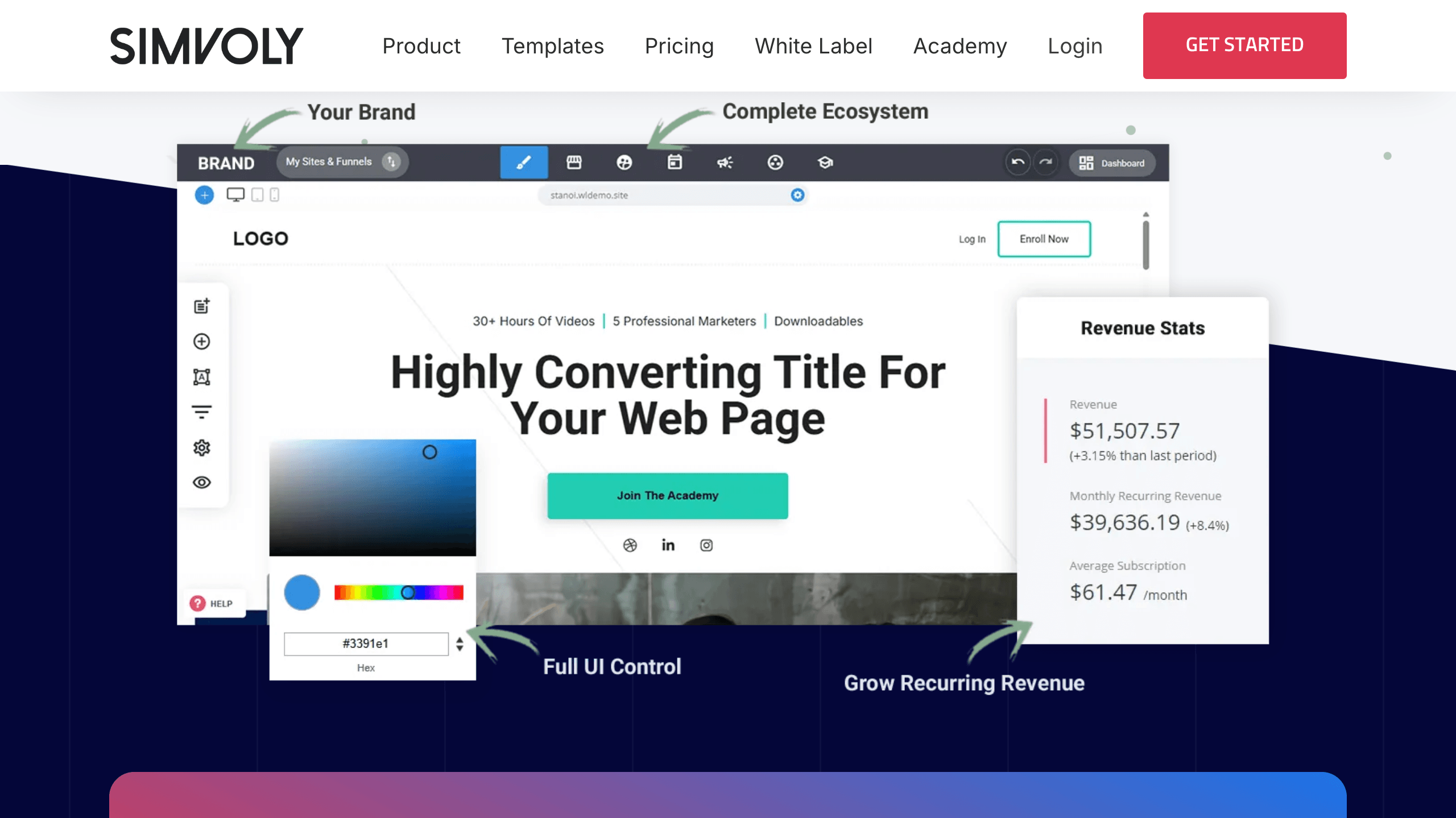
Simvoly
Simvoly’s all-in-one, funnel‑first architecture can limit scalability for complex, high-volume or highly customized web projects.
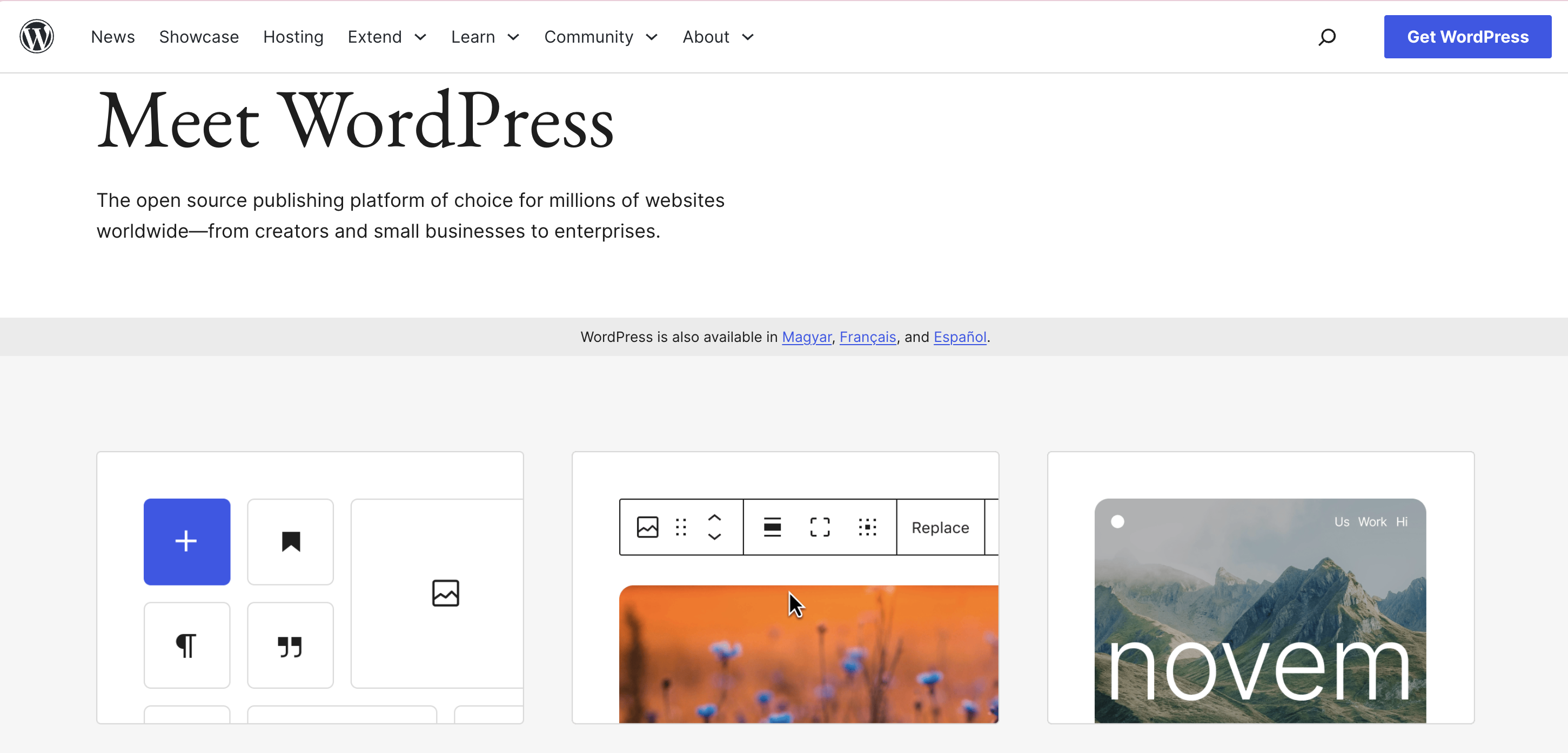
WordPress
Without proper hosting and upkeep, Wordpress sites can suffer from security risks or performance slowdowns; plugin compatibility and updates need careful management.
Comparison Chart
WordPress vs. Simvoly: Feature Comparison at a Glance
A quick score-by-score breakdown of how Simvoly and WordPress stack up across key blogging features.
Setup & Migration
Customization and Performance
Platform Ecosystem and Integrations
Cost and Support
SEO and Blogging*
10
8
6
4
2
0
Simvoly
WordPress
*SEO and Blogging scores reflect DropInBlog integration, where both platforms score 10/10.
" transform="translate(5.203 5.015)" width="5.667921508455159px"/><path d="M 10.963 3.648 C 11.431 4.866 11.466 6.205 11.062 7.445 C 10.665 8.685 9.851 9.748 8.76 10.456 C 7.669 11.165 6.372 11.484 5.083 11.342 C 3.793 11.207 2.589 10.633 1.668 9.712 C 0.754 8.791 0.173 7.58 0.031 6.29 C -0.104 4.994 0.201 3.69 0.91 2.599 C 1.611 1.508 2.674 0.686 3.907 0.282 C 5.139 -0.122 6.478 -0.093 7.69 0.374" fill="transparent" height="11.374799430541554px" id="hkzee8Fiz" stroke-dasharray="" stroke-linecap="round" stroke-linejoin="miter" stroke-miterlimit="10" stroke-width="1.6" stroke="rgb(30, 32, 35)" transform="translate(2.373 2.175)" width="11.341380903273622px"/><path d="M 4.931 0 L 0 4.952" fill="transparent" height="4.95233697147681px" id="MyGBPOHPD" stroke-dasharray="" stroke-linecap="round" stroke-linejoin="miter" stroke-miterlimit="10" stroke-width="1.6" stroke="rgb(30, 32, 35)" transform="translate(8.044 2.911)" width="4.93108226582032px"/><path d="M 2.125 2.125 L 0 2.125 L 0 0" fill="transparent" height="2.125470565670791px" id="uwpXBFmdG" stroke-dasharray="" stroke-linecap="round" stroke-linejoin="miter" stroke-miterlimit="10" stroke-width="1.6" stroke="rgb(30, 32, 35)" transform="translate(12.996 0.8)" width="2.1254705656706694px"/></svg>)









" transform="translate(8.972 11.235)" width="1px"/><path d="M 12.75 6.375 C 12.75 2.854 9.896 0 6.375 0 C 2.854 0 0 2.854 0 6.375 C 0 9.896 2.854 12.75 6.375 12.75 C 9.896 12.75 12.75 9.896 12.75 6.375 Z" fill="transparent" height="12.749995277777776px" id="G1LqZeWyx" stroke-dasharray="" stroke-linecap="round" stroke-linejoin="round" stroke-width="1.23" stroke="rgb(30, 32, 35)" transform="translate(1.889 1.861)" width="12.75px"/><path d="M 0 0.706 C 0.227 0.465 0.489 0.274 0.793 0.154 C 1.091 0.033 1.424 -0.016 1.75 0.005 C 2.083 0.033 2.394 0.125 2.678 0.288 C 2.961 0.451 3.202 0.685 3.379 0.954 C 3.556 1.23 3.676 1.535 3.726 1.868 C 3.761 2.186 3.74 2.526 3.634 2.831 C 3.542 3.136 3.365 3.433 3.138 3.653 C 2.904 3.886 2.628 4.064 2.316 4.177" fill="transparent" height="4.176867474042281px" id="nR8CIIsAJ" stroke-dasharray="" stroke-linecap="round" stroke-linejoin="round" stroke-width="1.23" stroke="rgb(30, 32, 35)" transform="translate(6.158 4.954)" width="3.7416656420466814px"/></svg>)
FAQ
Still Have Questions? Check the Answers
What is DropInBlog?
DropInBlog is the leading way to add a full-featured blog to your existing website without using WordPress. It’s quick to set up, blends with your site’s design, and is built for great SEO.
How does DropInBlog integrate with my website?
DropInBlog can be integrated in minutes by pasting just a couple of lines of code or using our app for most site builders. For advanced users, there is a full JSON API.
Can DropInBlog match the style of my current website?
DropInBlog seamlessly integrates with your existing website design, ensuring consistency in style and layout. With the Design Customization option, you have the freedom to easily tweak several design elements such as fonts and link colors.
What are the key features of DropInBlog?
Key features include seamless integration with site design, listen-to-article player, various SEO tools, help with AI mentions, easy-to-use interface, and friendly customer support. See all the features of DropInBlog on the Features page.
" transform="translate(3.996 5.461)" width="6px"/><path d="M 11.605 3.861 C 12.1 5.151 12.138 6.569 11.71 7.881 C 11.29 9.194 10.428 10.319 9.273 11.069 C 8.118 11.819 6.745 12.156 5.38 12.006 C 4.015 11.864 2.74 11.256 1.765 10.281 C 0.798 9.306 0.183 8.024 0.033 6.659 C -0.11 5.286 0.213 3.906 0.963 2.751 C 1.705 1.596 2.83 0.726 4.135 0.299 C 5.44 -0.129 6.858 -0.099 8.14 0.396" fill="transparent" height="12.041263317683857px" id="y87LrscfG" stroke-dasharray="" stroke-linecap="round" stroke-linejoin="miter" stroke-miterlimit="10" stroke-width="1.5" stroke="rgb(30, 32, 35)" transform="translate(1 2.457)" width="12.005900591728873px"/><path d="M 5.22 0 L 0 5.242" fill="transparent" height="5.24249px" id="nbsOQfjzg" stroke-dasharray="" stroke-linecap="round" stroke-linejoin="miter" stroke-miterlimit="10" stroke-width="1.5" stroke="rgb(30, 32, 35)" transform="translate(7.002 3.234)" width="5.21995px"/><path d="M 2.25 2.25 L 0 2.25 L 0 0" fill="transparent" height="2.25px" id="rwINJ9lwj" stroke-dasharray="" stroke-linecap="round" stroke-linejoin="miter" stroke-miterlimit="10" stroke-width="1.5" stroke="rgb(30, 32, 35)" transform="translate(12.246 1)" width="2.25px"/></svg>)
Solution
“We swapped our :platform1 blog for DropInBlog and saw a dramatic improvement in speed, simplicity, and SEO – without sacrificing any flexibility.”

Marissa L.
Founder of BoldPress
If you’ve made it this far, you’re probably doing what most teams do: trying to pick the right platform before you commit. You also want a site that actually drives traffic, leads, and growth.
That’s exactly why DropInBlog exists. It’s the simplest way to add a serious content engine to :platform2, :platform1, or your existing site builder, so you can launch a powerful, SEO-friendly blog today.
If you want the most straightforward path to content marketing that performs, DropInBlog is the next step. Try it free or book a quick demo and we’ll help you get set up.