
With Shopify Hydrogen, you can create a custom design for your online store – beyond the platform’s theme limitations. Shopify’s standard technologies still manage your store’s back end, while the front end is managed through React, JavaScript, and Oxygen. This tech stack unlocks the highest level of customization and performance for brands that outgrow Shopify’s traditional offering.
And while the platform’s front-end innovation is truly impressive, the content layer still needs to be managed from the back end. That means you get Shopify’s native engine for blogging, which is suitable for smaller stores but can’t meet enterprise-level requirements.
When long-term growth, performance, and scalability are priorities, a traditional blogging setup quickly becomes a limitation. That’s why Hydrogen-powered stores need a blogging solution designed for headless architectures.
Table of Contents
Shopify Hydrogen: Engineered for Performance, Flexibility, and Scale
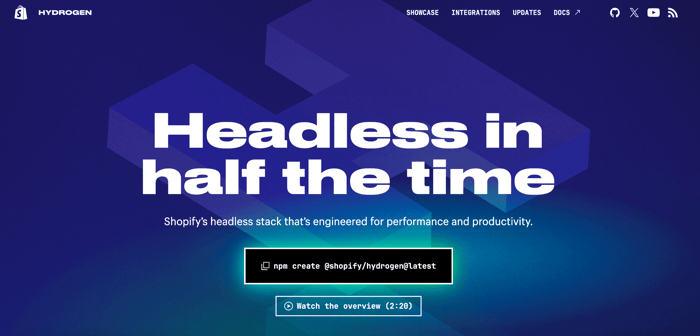
Now, let’s look at the contrast between Shopify’s front end and content layer.
Hydrogen’s frontend capabilities include:
Creating a fully custom storefront thanks to Hydrogen’s architecture.
Running a speed-optimized store through server-side rendering, selective data fetching, and edge delivery.
Managing huge catalogs and global audiences by retrieving store products, shopping carts, and inventories from Shopify’s storefront API.
In short, Hydrogen stores are synonymous with speed, control, and scalability.
By contrast, blogging operations offer the following:
Basic blogging features
No way to implement multi-author publishing workflows
No staging environments
Limited SEO features
By contrasting these two layers, it’s clear that Hydrogen gives developers total creative control, while content teams are left without a parallel tool for scalable publishing.
The Limitations of Traditional Blog Approaches on Shopify
Many Shopify stores use Shopify’s native blogging engine in combination with Liquid themes, which control how a blog works and performs. Others use theme-based blogging apps that work on top of Shopify’s blogging infrastructure, extending its core functionalities.
Regardless of the option you choose, you can’t bypass Shopify’s limitations related to performance, design, SEO, and scalability. Because of this architecture, traditional Shopify blogs struggle to meet the needs of modern, content-driven brands. Common limitations include:
Performance bottlenecks, caused by theme dependencies and additional scripts.
Limited design flexibility, making it difficult to match a custom Hydrogen front end.
Basic editorial workflows, with little support for multi-author publishing, approvals, or staging environments.
Restricted SEO controls, including limited schema management and internal linking options.
Scalability challenges, especially for large content libraries and global teams.
Perhaps most importantly, neither Shopify’s native blog nor theme-based apps integrate cleanly with Hydrogen. Since Hydrogen doesn’t support blogging out of the box, teams are often forced to manage their storefront and blog as separate systems – adding complexity, slowing down content production, and increasing reliance on developers.
For brands investing in headless commerce, these limitations aren’t minor inconveniences. They’re structural issues that make traditional blogging tools a poor fit for Hydrogen-powered stores.
DropInBlog: A Content Engine Built for Hydrogen-Powered Stores

DropInBlog, a dedicated blogging solution, positions itself as the best blog option for Hydrogen due to its seamless integration with Hydrogen stores and various enterprise-grade blogging features. The API-based integration gives brands a fully functional blog that complements Hydrogen’s architecture.
One of DropInBlog’s numerous benefits is that developers can stay focused on optimizing and customizing their Hydrogen store, while content teams and marketers can manage a company’s blog.
Here are the other benefits of using Hydrogen with DropInBlog.
DropInBlog Enterprise Features That Matter for Hydrogen Brands
DropInBlog surpasses the limitations of the native Shopify blog and many third-party apps. It offers the features that enterprise brands need to run fast, SEO-friendly blogs at scale.
Workflow independence: With DropInBlog’s user roles and customizable permissions, you have controlled access to your blog. Additionally, with staging environments, your teams can collaborate efficiently and reduce publishing errors – all while protecting your live website from any discrepancies.
Hydrogen-optimized performance: Since your content is hosted on DropInBlog, adding a blog to your store will have no impact on page speed and Core Web Vitals.
Front-end control: Another benefit of using DropInBlog for Hydrogen stores is its compatibility with Hydrogen UI components, enabling consistent rendering and styling. And you can easily integrate the blogging platform with Hydrogen’s React framework via API and bypass Shopify’s theme dependencies.
Enterprise operations: To ensure seamless adoption, training, and ongoing product support at scale, DropInBlog users have a dedicated success manager. The platform also provides audit logs that help large companies meet security and compliance requirements.
DropInBlog SEO Features for Hydrogen-Powered Brands
Beyond workflows and performance, SEO is another area where Hydrogen stores require purpose-built tooling. For Hydrogen-powered stores, SEO isn’t just about rankings; it’s about ensuring that a headless, custom front end remains fully crawlable, indexable, and optimized for organic growth. To help you meet those goals, DropInBlog offers the following features:
Blog-level SEO controls: DropInBlog offers plenty of features to ensure your content works well with the Hydrogen front end and is indexed by search engines. You control your blog’s metadata, URL structure, and schema.
Post-level SEO controls: This blogging tool also supports real-time SEO analysis via its built-in SEO tool. Structured data, which prepares your blog for rich results, is automatically added, increasing your content’s discoverability – even with a custom front end.
Internal-linking features: You can also leverage DropInBlog’s elements, like a table of contents and related posts, to improve your site's internal linking structure.
Now, all these SEO tools and features work seamlessly with Hydrogen’s headless setup. Unlike the Shopify native blog, your DropInBlog blog doesn’t rely on Shopify’s theme environment, bypassing all the limitations that come with it.
Explore how DropInBlog can power your enterprise blog on a Hydrogen storefront.
Built for Headless Architectures and Long-Term Growth
If you’re wondering how DropInBlog is compatible with Hydrogen – a headless, React-based platform – the answer is this: DropInBlog is front-end-agnostic. That means it integrates smoothly with the most diverse tech stacks and platforms, including Hydrogen. Its platform-agnostic nature also means that tomorrow you can migrate your Shopify store to BigCommerce’s Catalyst and have your blog run without a glitch.
What this further means for brands is that they can manage their blog as another part of Hydrogen’s headless architecture. Content teams have nothing to do with a store’s back end and can create and publish blog content just as they do with any other site content. More importantly, they are not tied to developers, which leads to faster and intuitive publishing workflows without CMS maintenance.
And when you add a blog to your Hydrogen-powered store, you can leverage many benefits that’ll have a positive impact on company growth:
Content helps with product conversions but offers far more than that. It’s the key ingredient in product discovery, brings in traffic through long-tail keywords, encourages repeat visits, and is a potent tool for increasing site visitors’ engagement.
With DropInBlog on your side, your content team can operate efficiently without relying on developers. In this setup, the content team can publish quickly and regularly, which, again, helps bring in traffic and improve product discovery.
Thanks to the abundance of advanced SEO features DropInBlog supports, your blog has a high chance of appearing in online searches and ranking well. When these criteria are met, your blog is likely to attract more organic traffic.
Start a Blog on Hydrogen Today
The best blog for Hydrogen stores is DropInBlog – it’s that simple. Being platform-agnostic, DropInBlog perfectly complements Hydrogen’s architecture. You can launch an enterprise blog in no time and enjoy its fast loading times and SEO-friendliness.
Talk with our team about enterprise setup, global deployment, and content workflow optimization.