
Table of Contents
Key Takeaways
- The best way to add a blog to your Softr site is with DropInBlog!
- The free trial and quick setup let you test it in a few minutes.
- DropInBlog has different pricing plans for individuals and teams.
Softr doesn't include a blog. There's no post type, no editor, no categories, and Softr's own community is direct about it: the platform "has had many blog functionality requests over the years, but is not designed for effective blogging."
That leaves four workarounds, and they aren't equivalent. Two of them have real SEO problems that don't surface until your posts aren't ranking. This guide covers all four: building posts as static pages, driving them from Airtable or Softr Databases, hosting on an external subdomain, or embedding a purpose-built blog with DropInBlog.
TL;DR
Static pages: create a separate Softr page for every post. No setup cost, but nothing scales: no index page, no categories, no editor.
Airtable or Softr Databases: drives posts dynamically from a data source. More capable, but content renders client-side, which limits SEO and page speed.
External subdomain: run Ghost, Substack, or WordPress on blog.yoursite.com. A real CMS, but it's a second platform and a separate domain.
DropInBlog: embed a full blog into a Softr page in about three minutes. A real post editor, built-in SEO tools, and it stays on your own domain.
Why Database Driven Blogs on Softr Struggle with SEO
Before picking a method, it's worth understanding the issue that surprises most people.
When you build a blog from Airtable or Softr Databases, your posts live in a database and render through Softr list blocks. Those blocks fetch content over an API and assemble the page in the browser after it loads. Your content isn't in the HTML a search engine receives first; it appears afterward if the crawler waits for it.
That creates two problems. Indexing depends on your field mapping, because if a mapping breaks, posts can fail to render for crawlers and visitors alike. And page speed suffers, because every post view waits on an API round trip before anything appears on screen.
This is the most common complaint about data-source blogs in the Softr community, and it's why people who start with the Airtable method tend to move off it once organic traffic matters. If your blog is internal documentation or the occasional company update, none of this is a problem. But if the blog exists to bring people to your app from search, it's the whole problem.
Method 1: Embed a Blog (Recommended)
Before you begin, sign up for a free trial and create a DropInBlog account. Then follow the steps below.
Step 1: Create a New Softr Page
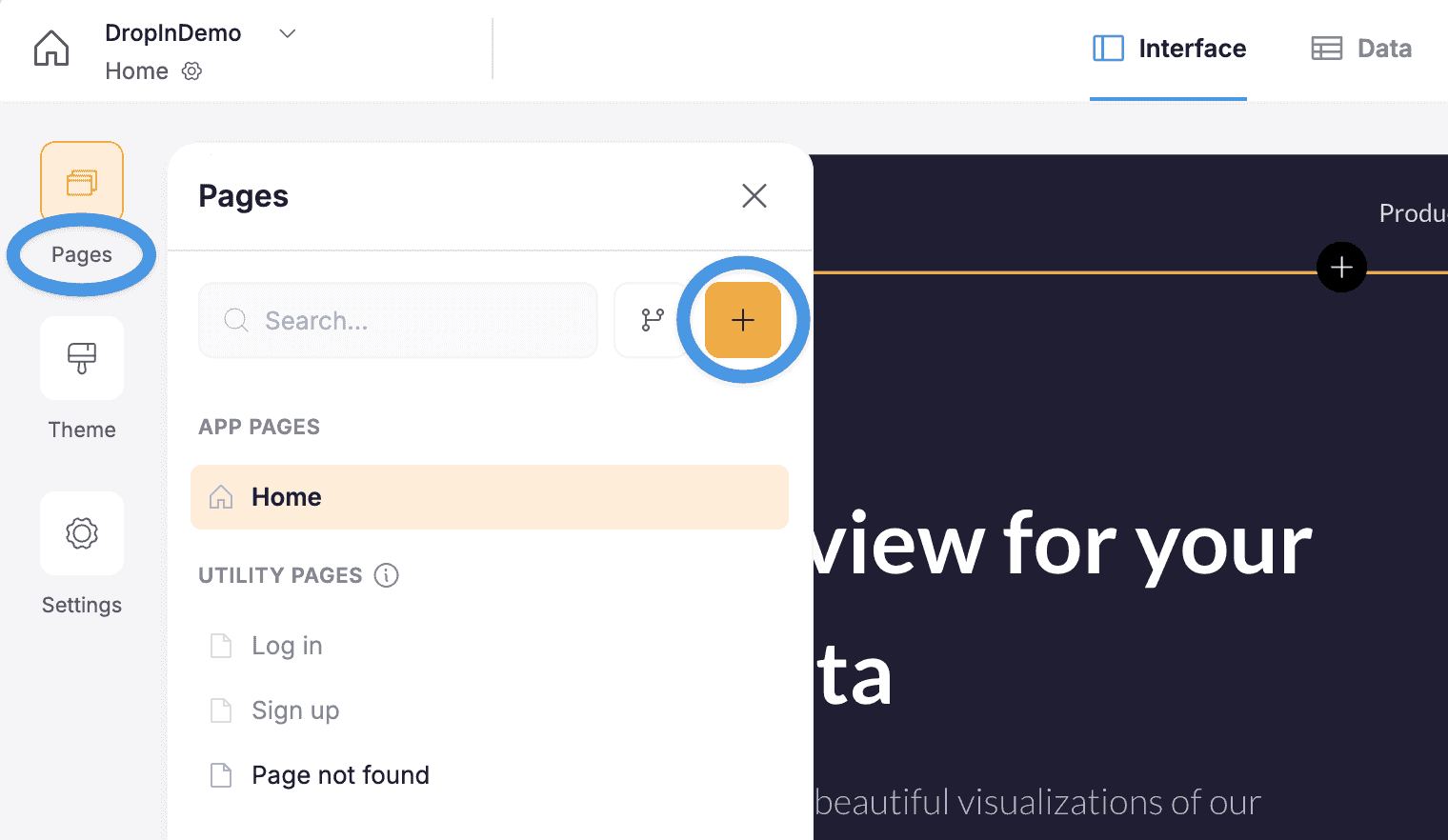
From within your Softr admin, locate and open the project to which you want to add a blog. Select the Pages icon on the left-hand side, then click on the plus sign icon in the slide-out window.
This will take you to a new slide-out window, where you need to add a page name and a slug. We’ll use “blog,” but you can name your page whatever you like.
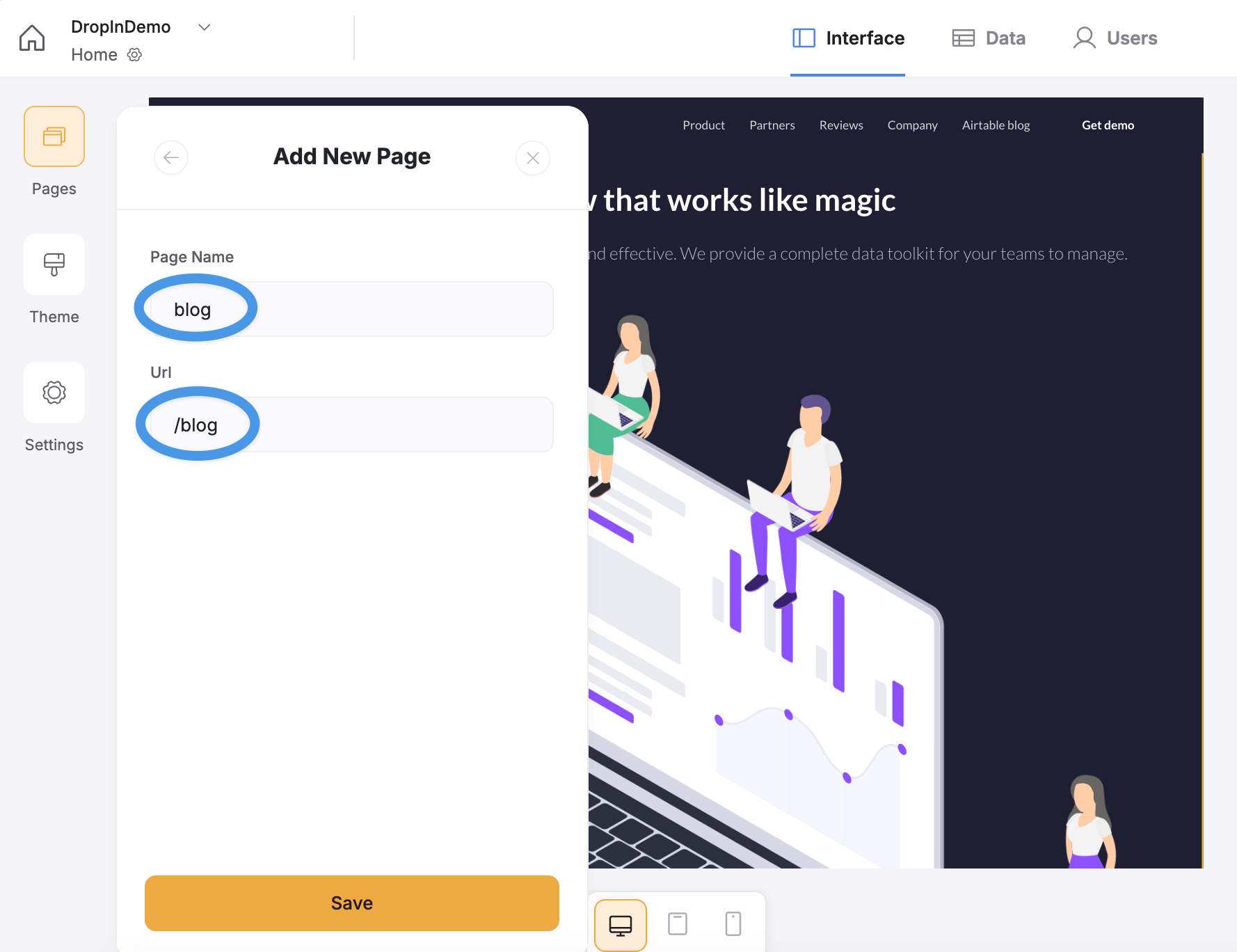
When you click on the Save button at the bottom of the window, you’ll be taken to your new page.
Step 2: Add a Custom Code Block
To add a custom code block to your new page, select the Static tab on the right side of the editor and look for Custom Code.
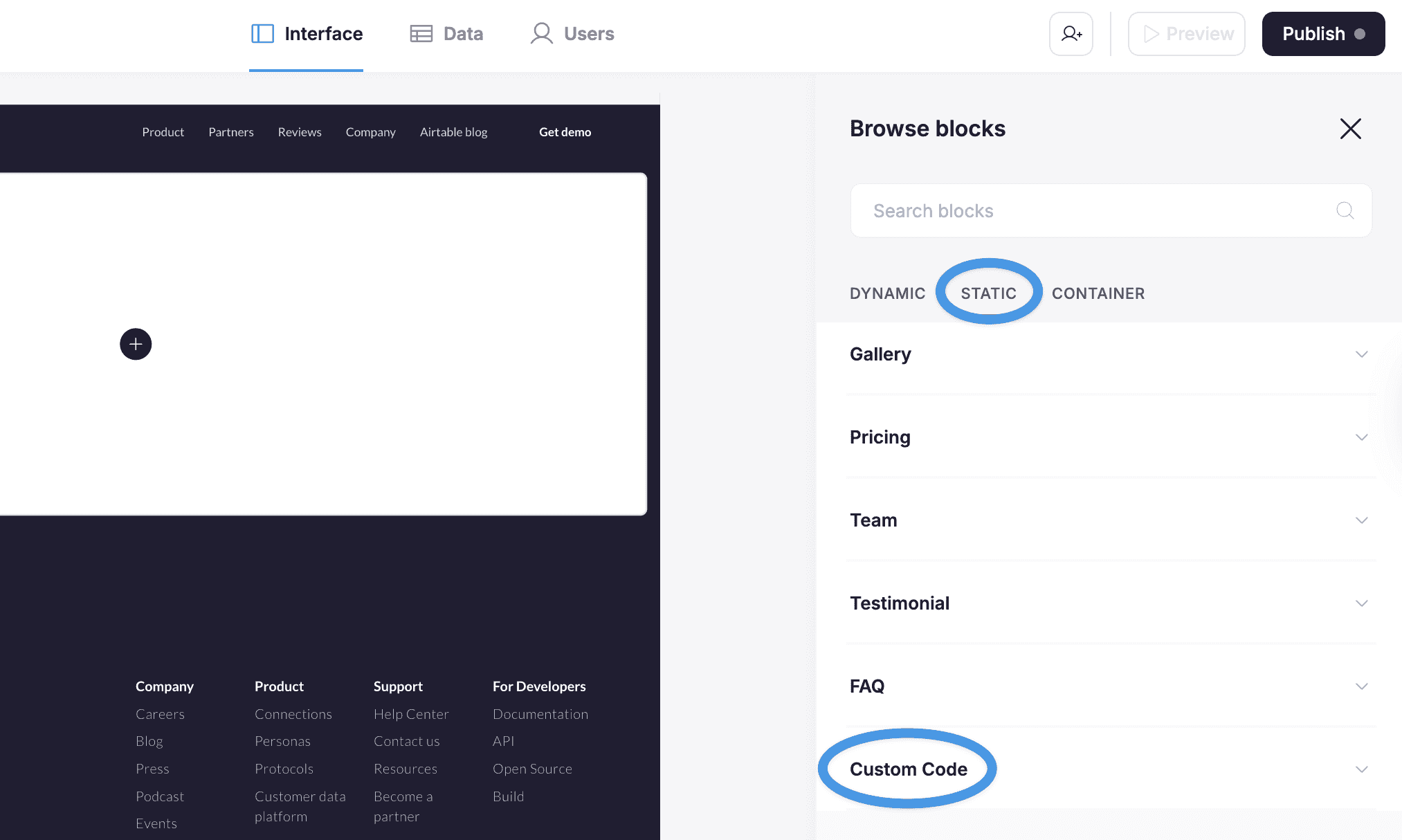
When you hover over this block, you’ll see a plus sign. Click on it to add this block to your page, and you’ll see the screen like the one in the image below.
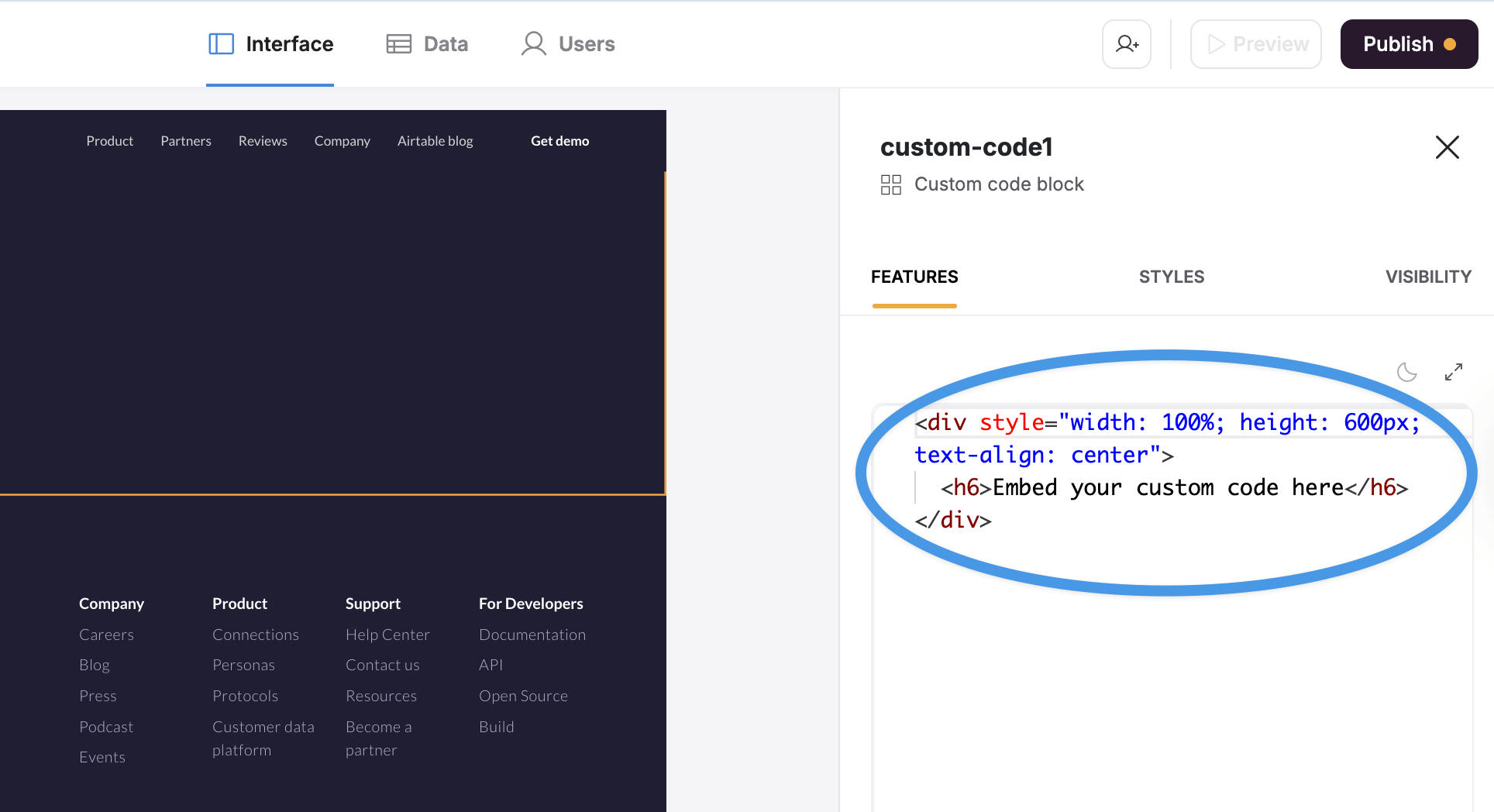
This is where you’ll add your DropInBlog code. Before proceeding to the next step, delete all content within the custom code block.
Step 3: Paste Two Code Snippets from Your DropInBlog Account
You’ll find your blog code on the Code & Layout page of your DropInBlog account.
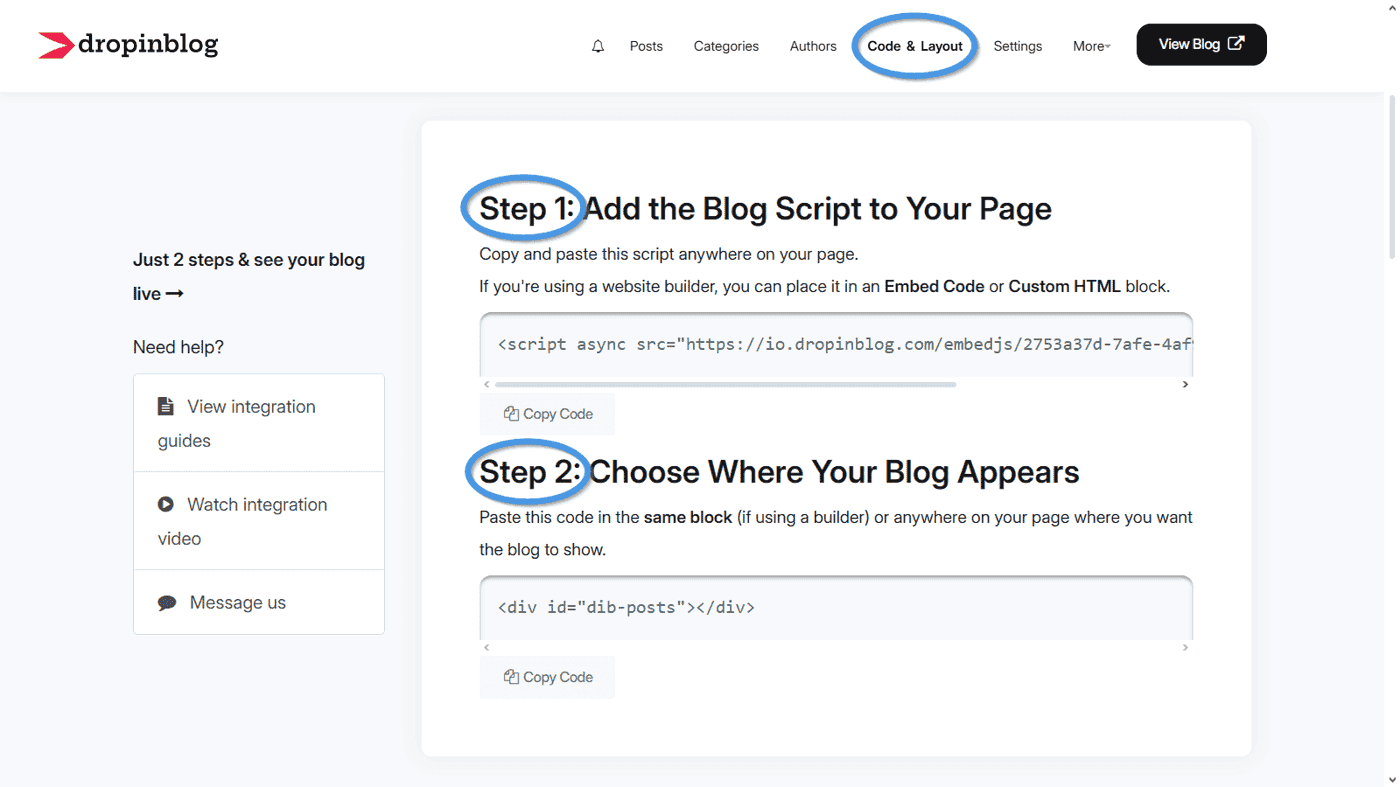
Copy the code under Step 1, then paste it inside the Custom Code block in Softr.
Return to your DropInBlog account and copy the code under Step 2, then paste the code into the Custom Code block in Softr.

Before you proceed, click on the Publish button from within the Softr editor, then click on the arrow to the right of your site’s domain to open your site in a new tab.
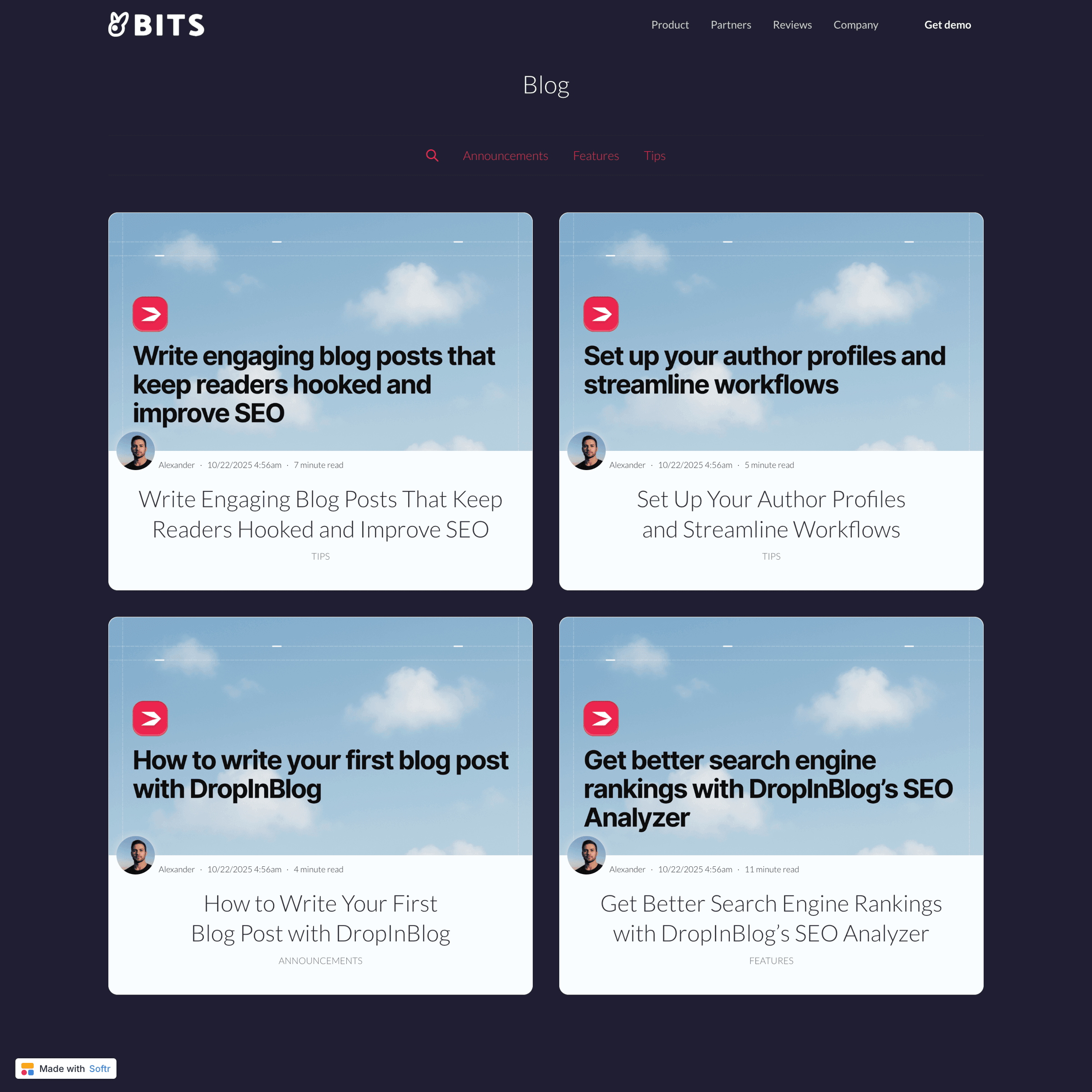
To access your new Softr blog, add “/blog” or however you named your blog to the end of the URL in the address bar.

This is how it turned out for us.
Next, copy your blog URL and head over to the Settings page of your DropInBlog account.
Under Blog URL, paste the link of your new blog and click on Save All Changes.
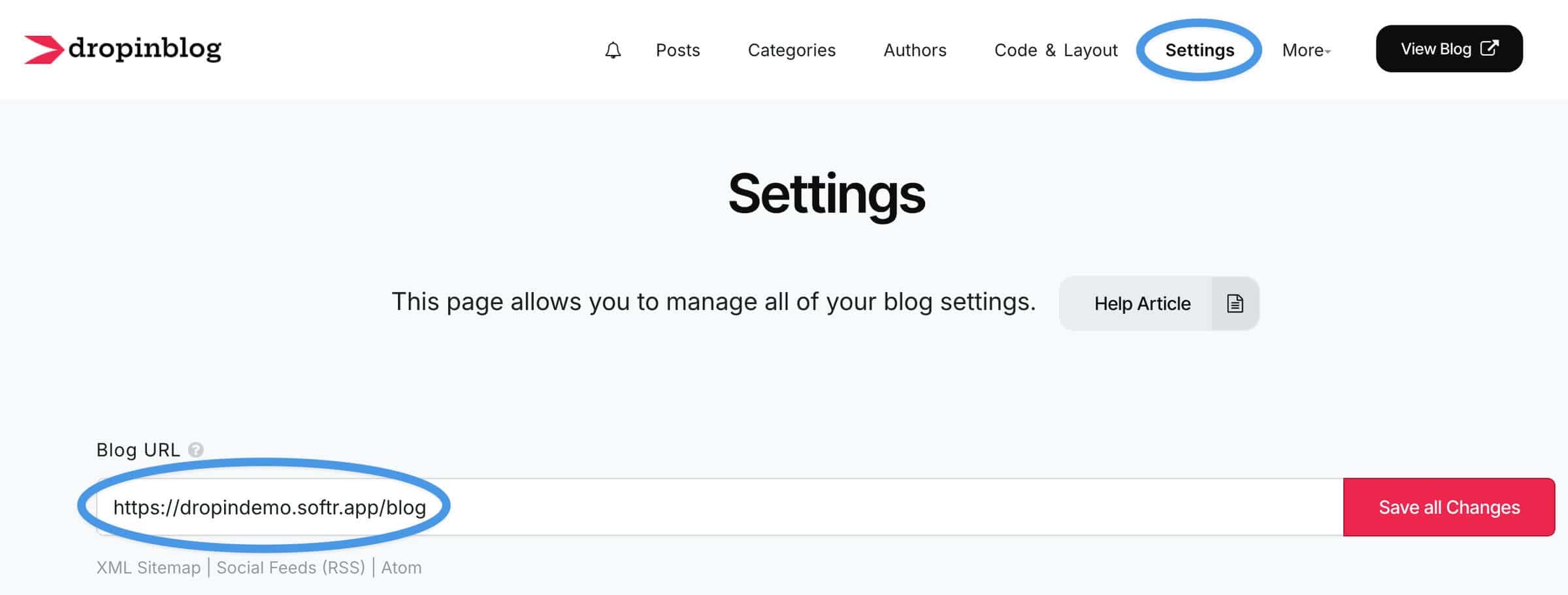
Now your data between Softr and DropInBlog is synced. All changes made to your DropInBlog account will be automatically reflected on your Softr site.
Step 4: Add a Blog Link to Your Site’s Menu
At this point, all that’s left to do is to add a link to your Softr site’s navigation menu so that your visitors can access your new blog.
Here’s how.
Open the Softr editor, and click inside the header area to access the menu settings on the right.
Under the Primary section, click on Add, then Page, and select the blog page you just created.
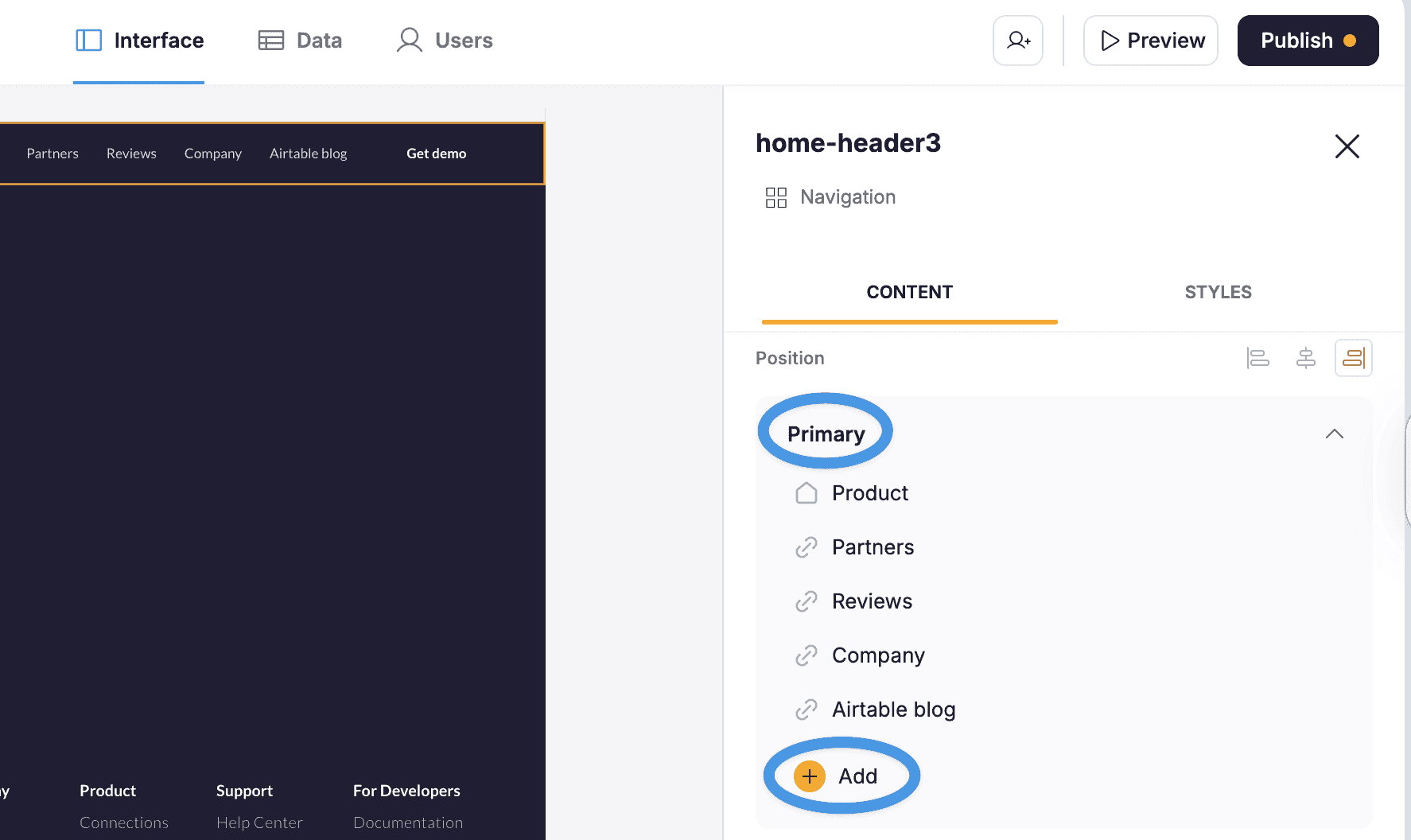
Save the changes you’ve made by re-publishing your site, then open your blog page.
That’s it! You have successfully added your DropInBlog blog to your Softr site.
Next Steps: Add New Blog Content
To create a new blog post for your Softr blog, go to your DropInBlog account, and click on the Add Post button on the Posts page.
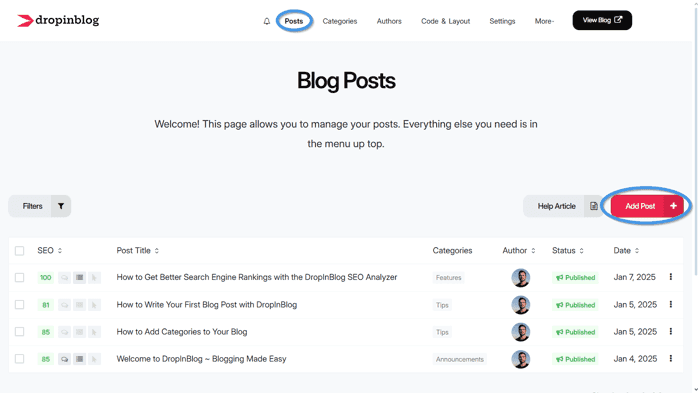
Doing so will take you to the post editor, where you can:
Add your content using a flexible WYSIWYG editor.
Add media to your content (images, videos).
Insert Smart Snippets™, reusable pieces of content.
Enable ToC and FAQ sections on a per-post basis.
Assign categories, authors, and related posts.
Below the content editor, you’ll find the SEO analysis tool, which you can use to optimize your content for search engines. To get started, just enter your target keyword, and once you add your content, you’ll get a content score along with suggestions on how to improve it.
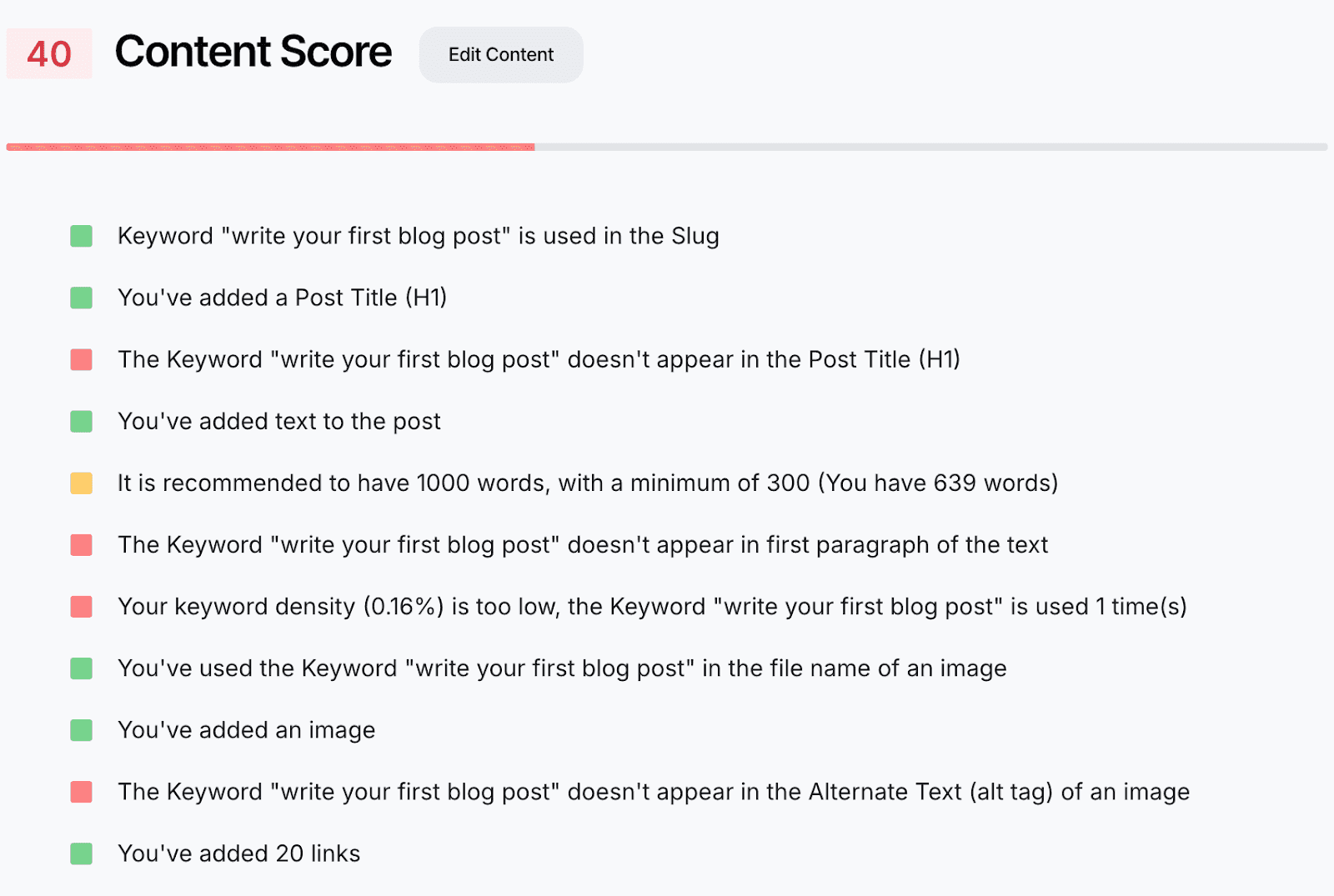
Another search-engine-friendly tool you’ll find inside the DropInBlog editor is Mention Boost™. The tool offers content formatting suggestions that can increase your visibility in AI searches. The higher the score you get, the higher the chances of your blog appearing in AI Overviews and LLMs like ChatGPT and Perplexity.
Invite Your Team Members
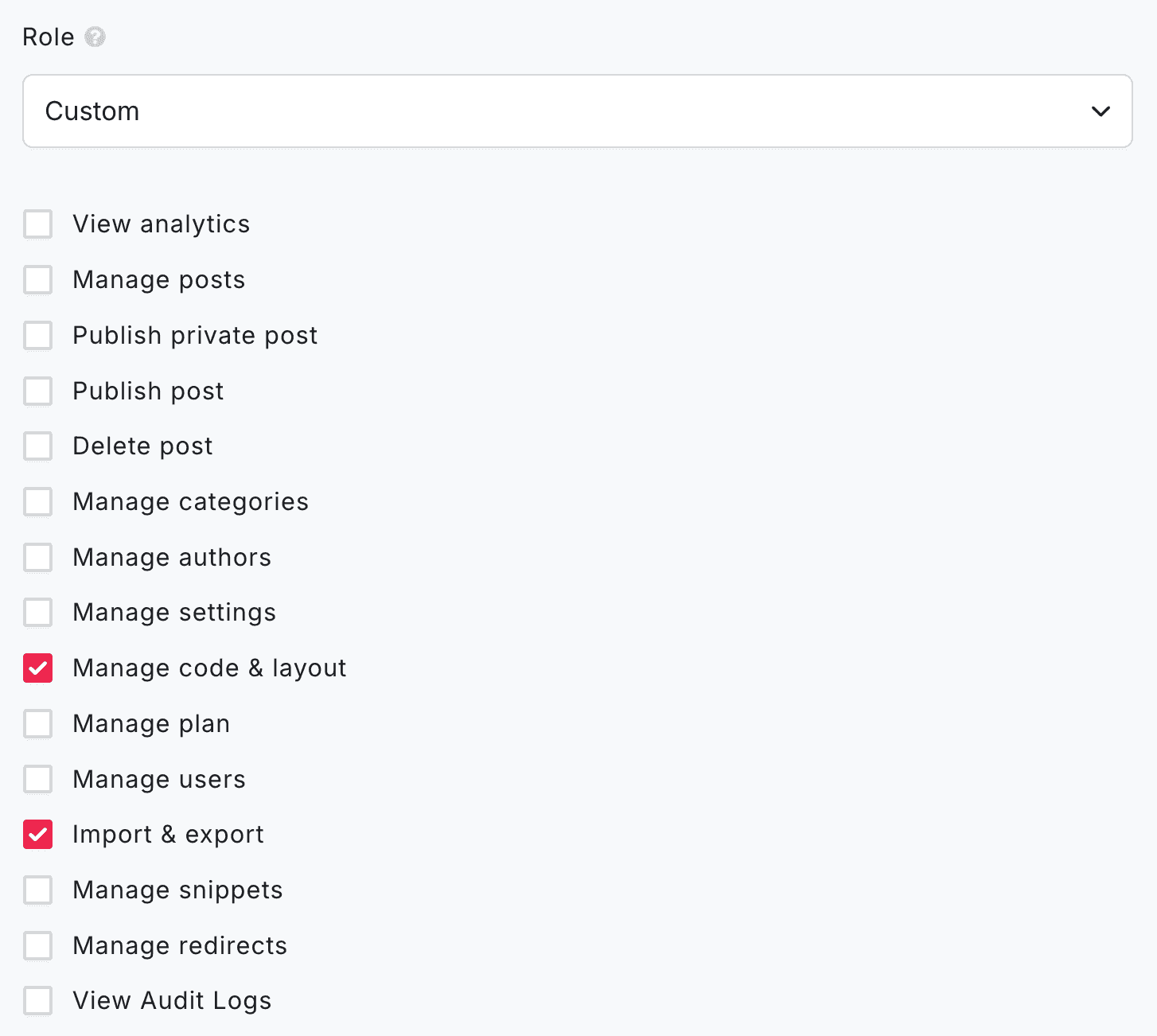
If you have a team of writers, designers, and SEO specialists, you can invite them all to your DropInBlog account. With the platform’s customizable user permissions, you can ensure that everyone on your team has access to the right part of your account.
Take Your DropInBlog Blog with You
If you decide to move away from Softr in the future, you can keep your DropInBlog blog. Since DropInBlog is an embeddable blogging tool, it works with almost any platform. That includes:
No-code platforms like Softr and Webflow
AI builders like Lovable
Traditional site builders like Squarespace and Weebly
Additionally, you can easily import your content into DropInBlog if you already have a blog. And if you want to back up your content, you can use the export tool to do so.
With DropInBlog, everything about blogging is easy.
Method 2: Build Posts as Static Pages
Best for small blogs that use blogging for infrequent company updates and feature releases.
If you want to add a blog to your Softr project using the no-code platform only, you can create a standard page for each new blog post.
With this blog integration method, you have to manually set the URL for each post to:
blog/article-title
Then, using Softr’s static blocks, you can add text, images, and videos to your page.
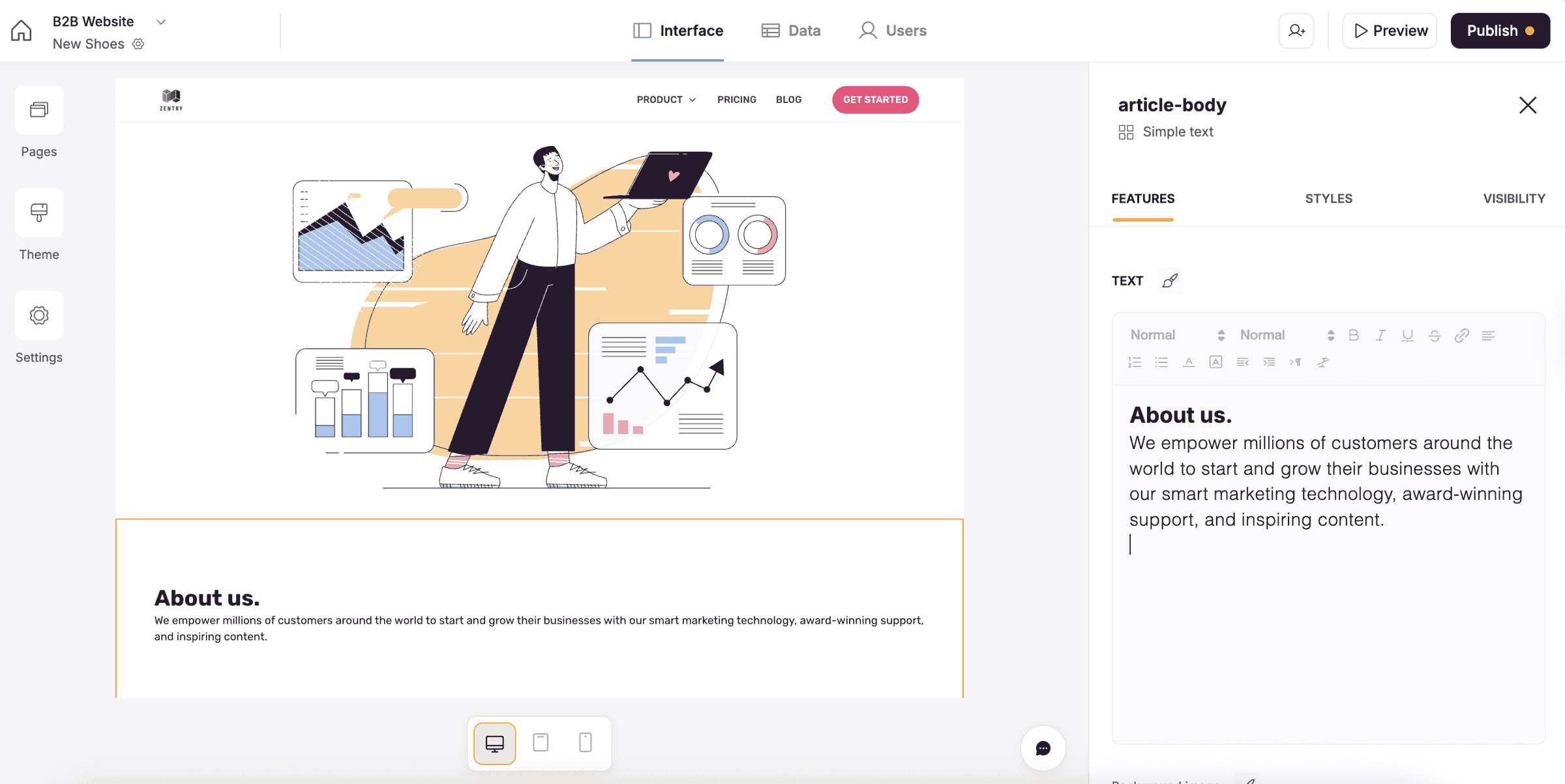
So, while it’s not impossible to create a blog on Softr without external apps, managing your content and the SEO side of things does have its challenges.
Method 3: Airtable or Softr Databases
Best for existing Airtable users, or teams already building on Softr Databases, who don't need a content-heavy blog.
This method drives your blog from a database instead of hand-building pages. You have two options for where that data lives: Airtable, which is the long-standing approach, or Softr Databases, Softr's own native product. The build is the same either way, and the only real difference is whether your content sits in an external base or inside Softr.
Start by creating a table with columns for the blog post title, body, author, image, and anything else you want on each post.
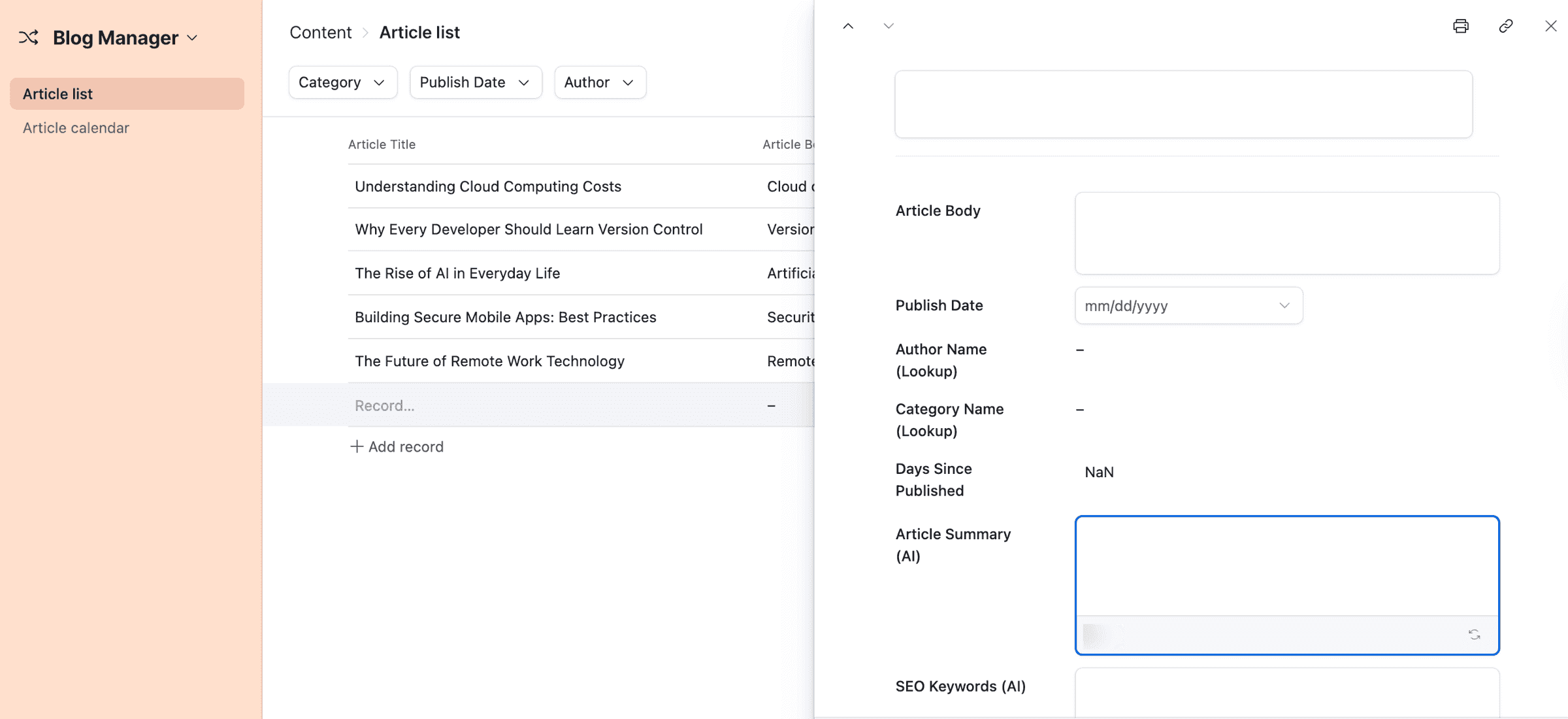
Once your content is in the table and connected to Softr, you'll need to:
Create two new Softr pages, one for your blog's homepage, one for individual blog posts
Add a list block to the homepage, and a list details block to the post page
Use the mapping fields feature to connect your data to the corresponding item fields in Softr
Airtable or Softr Databases?
If you're already running Airtable, staying there makes sense, since your content lives alongside whatever else you've built. If you're starting fresh, Softr Databases removes the external dependency and the API connection step, which is where most people get stuck.
Either way, there are three things to know before committing.
- The setup takes time if you haven't built with list blocks before, and the field mapping has to be exactly right, or your posts won't render for visitors at all.
- Neither option gives you a real post editor, which is why people using this method often draft in Google Docs or WordPress first and paste the formatted body into the table.
- Most importantly, this is the method with the SEO and page speed limitations covered earlier. Your posts render client-side from the data source, so search engines don't receive the content in the initial HTML.
DropInBlog takes care of the first two: there's no data source to map, and you get a real post editor with built-in SEO tools. On the third, the DropInBlog embed you add to Softr is also client-side rendered, and Google indexes those posts through its rendering. If you want crawlers that only read raw HTML to get your content too, the SEO Supercharger (included in every plan, requires a Cloudflare connection) serves them static HTML. You can read more about how DropInBlog posts get indexed. All you need is a Softr account and a DropInBlog account.
Method 4: Host Your Blog on an External Subdomain
Best for content operations that are effectively separate from your app.
The fourth option is to run your blog somewhere purpose-built like Ghost, Substack, or WordPress on a subdomain like blog.yoursite.com, then add an external link in your Softr navigation pointing to it. This comes up regularly in the Softr community, usually with Ghost as the recommendation.
You get a real CMS with proper editorial tooling and none of Softr's rendering constraints. The cost is that your blog becomes a separate site. Content on a subdomain doesn't pass the same authority back to your main domain as content on the same domain. You're also maintaining and paying for a second platform, and the visual handoff between your app and your blog is rarely seamless.
If you're prepared to run a separate platform anyway, embedding one directly into a Softr page gets you the same editorial tooling while keeping everything on one domain.
FAQs
Does Softr have a built-in blog?
No. Softr has no blogging CMS. Softr's own community documentation notes the platform "is not designed for effective blogging." You add one by building static pages, driving posts from a data source, linking out to an external subdomain, or embedding a blogging platform like DropInBlog into a Softr page.
Can I build a blog on Softr with Airtable?
Yes, and it's a common approach. Create an Airtable table with title, body, author, image, and slug fields, then connect a Softr list block for the index and a list details block for individual posts. Softr's native Databases product works the same way without the Airtable dependency. Both render content client-side, which brings the SEO and speed limitations covered above.
Is Softr good for SEO?
Softr handles page-level basics: titles, descriptions, URL slugs. Where it gets harder is blog content specifically. Posts driven from a data source render in the browser rather than arriving as finished HTML, which slows indexing and hurts page speed. Static pages and embedded blogs avoid that.
Should my Softr blog be on a subdomain or the same domain?
The same domain wherever possible. A subdomain is treated more like a separate site, so blog content contributes less to your main domain's authority. Embedding a blog on a Softr page with DropInBlog keeps everything together.
Do I need Airtable to add a blog to Softr?
No. Airtable is only needed for the data-source method, and Softr's native Databases can replace it there. Static pages and embedded blogs like DropInBlog need no data source at all.
Create a Blog on Softr with DropInBlog Today!
With Softr, you can create powerful websites and apps; however, we recommend leaving the blogging to DropInBlog. You need a professional blog to match your professional Softr app, and DropInBlog is perfectly suited for that role.
Sign up for a free trial today and discover all the things you can do with DropInBlog.
If you have any questions or need assistance setting up your blog, please don't hesitate to send us a message.
Happy blogging!