
Table of Contents
Thinkific was founded in 2012 by a group of aspiring entrepreneurs, and over time, it has grown to become one of the most widely known names in the online education business niche.
With its increased popularity, it’s only natural to start wondering if Thinkific would be a good choice for you and your online education business endeavor. This Thinkific review is here to help you learn more about the platform and, eventually, help you make a better-informed decision on whether Thinkific is the right choice for you.
Pricing Plans
As of November 2026, Thinkific offers three self-serve plans (Start, Grow, and Expand) and one enterprise plan (Thinkific Plus). The Free and Basic plans are no longer available to new customers, and every new account now starts with a 30-day free trial instead of a free plan.
Every plan includes unlimited courses, digital downloads, and coaching or webinar products, plus the drag-and-drop course builder, quizzes, assignments, completion certificates, landing pages, the site builder, standard reporting, and SSL. The tiers differ in limits, support, and advanced features.
Start
Start is the entry plan. It costs $109/month with monthly billing or $82/month if you pay for a year upfront.
On top of the features every plan shares, Start includes:
- Video lessons, multimedia, and in-course discussions
- Live cohorts and coaching, with Zoom sessions, booking calendars, and attendance tracking
- Course bundles, upsells, and payment plans
- Memberships and subscriptions
- A custom domain
- One community with 10 community spaces
- Two administrator accounts
- Email and chat support
For most new course creators, Start covers the essentials. The limits you’ll feel first are the Thinkific branding on your site, the single community, and the 50-student cap per group.
Grow
The Grow plan is Thinkific’s most popular option. It costs $219/month or $164/month billed annually.
In addition to everything in Start, Grow adds:
- Removal of the Thinkific branding
- Three communities with 20 community spaces
- Bulk enrollment and imports
- B2B sales and invoicing
- API access and webhooks
- Student engagement reports
- Six administrator accounts
- Phone and priority chat support
Note that API access and webhooks start at Grow, so if you want to connect Thinkific to other tools programmatically, this is the minimum plan.
Expand
The Expand plan is a scaled-up version of Grow. It costs $499/month or $374/month billed annually, and you get the same core feature set with higher limits and more support:
- 10 communities with 200 community spaces
- 15 administrator accounts
- Unlimited group sizes
- Email white labeling and custom SSL
- Revenue sharing with up to 10 partners
- 1,000 GB/month of video bandwidth
- Dedicated launch support
Thinkific Plus
Thinkific Plus is the enterprise-level package. It includes everything in Expand, plus:
- A dedicated customer success team
- Single sign-on (SSO)
- SCORM support, learning paths, and exams and credentialing
- An AI teaching assistant
- CRM integrations
- Custom roles, additional administrators, and custom analytics dashboards
It’s marketed as the plan for companies and high-volume customers, and for the price, you have to talk to the Thinkific sales team. A branded mobile app is available as a $199/month add-on and comes included on select Plus plans.
For the full feature breakdown, see Thinkific’s pricing page.
Ease of Use
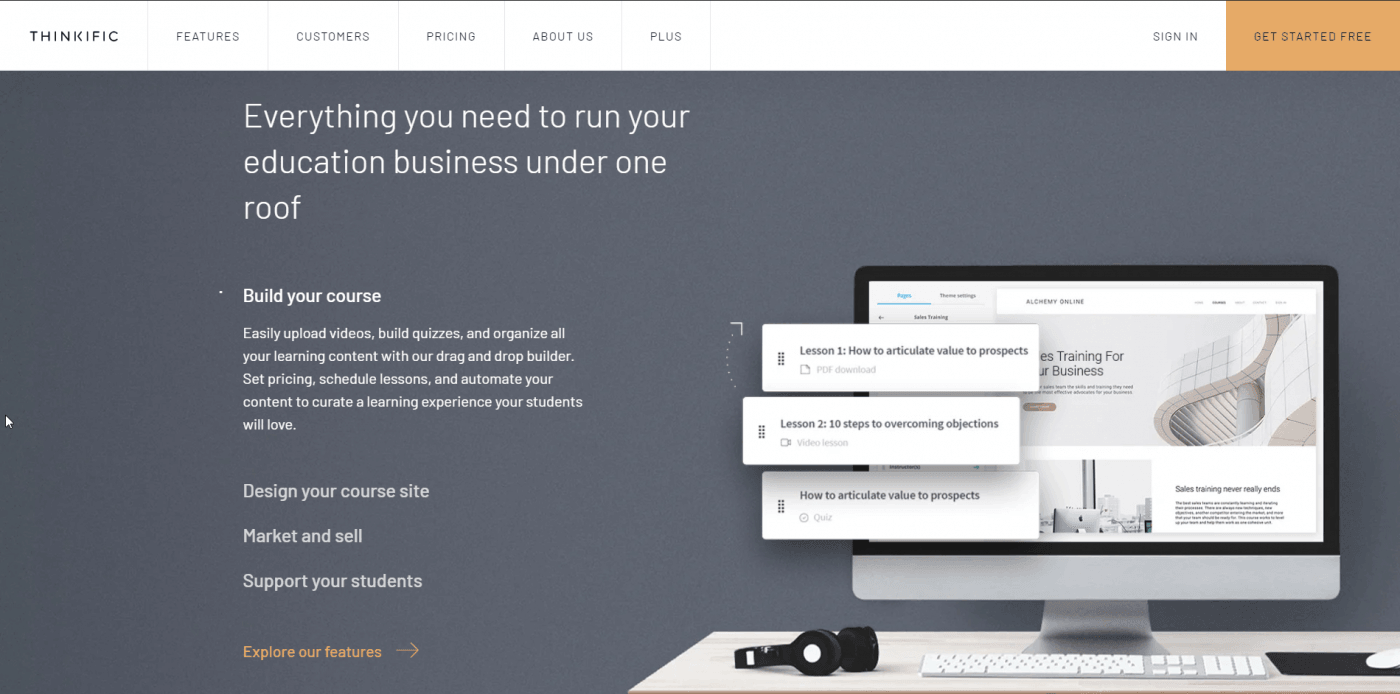
Thinkific is simple, and you don’t have to be tech-savvy to be able to use it. It’s user-friendly both for course creators and students alike – a winning combination.
The interface is elegant and intuitive. It’s clean and tidy, and everything feels like it’s in the right place. You don’t have to search for things to figure out where they are and what they do. But, just in case, there’s a lot of available training and educational material that can help you figure out how to solve any problems you have by yourself.
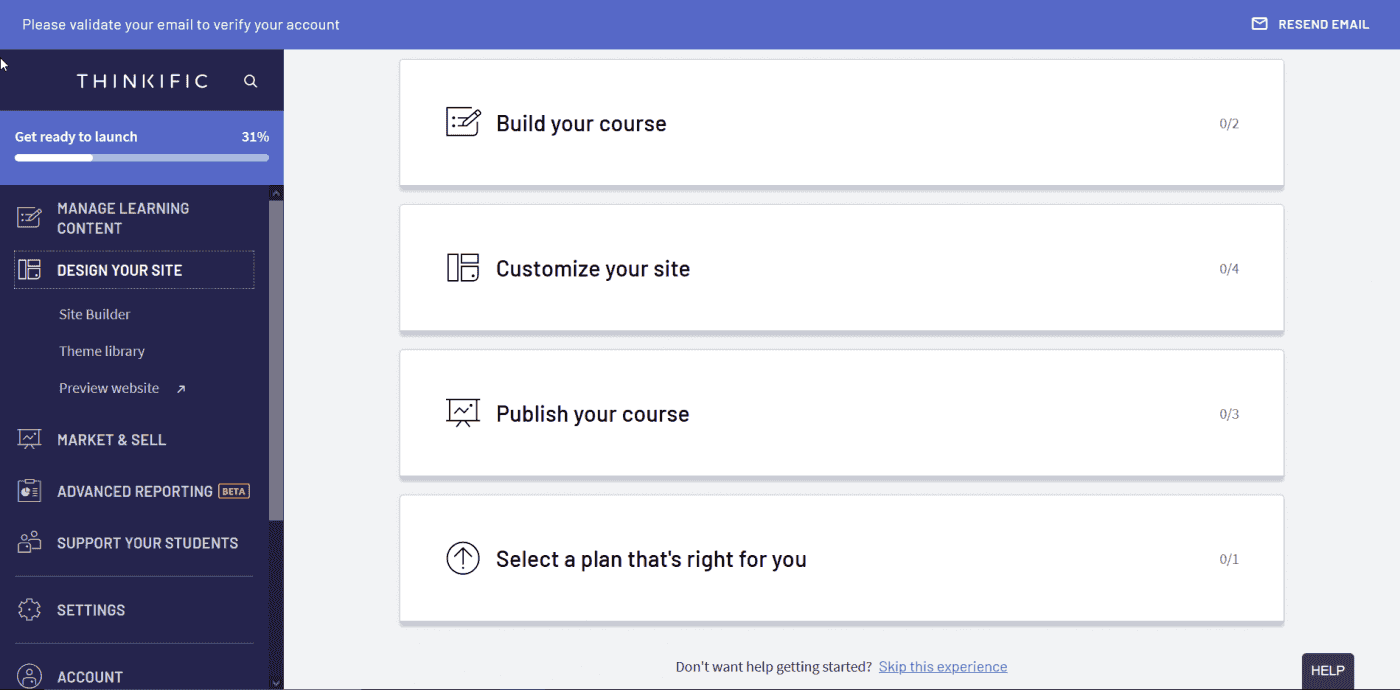
Everything in the navigation section is pretty much self-explanatory. You just click on an element, and you get to choose what you want to do next by selecting one of the items from the drop-down list. Moreover, the process of customization is a breeze. Speaking of which…
Customization
As we already saw, Thinkific is quite feature-packed. In that sense, you have more than enough options to create great courses and tons of tools to manage, maintain, and grow your online education business.
For starters, there are templates for course creation, a theme library where you can pick a design for your site, and templates for creating certificates. The good thing is that everything is customizable, to an extent. So, within some boundaries you can customize your site to fit your brand.
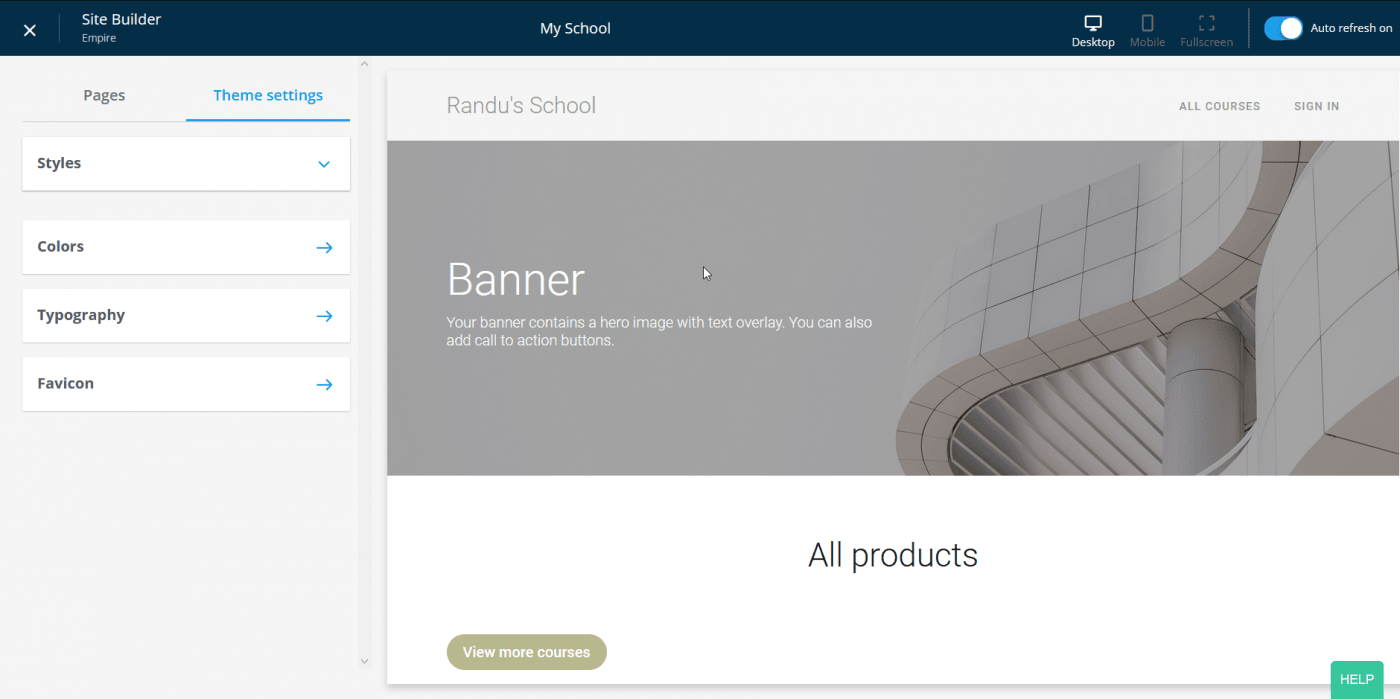
One potential drawback when it comes to creating pages and the overall design possibilities is that the available customization options are pretty limited. For example, in the site builder, you have the option to change the styles, colors, typography, and favicon.
However, if you really need more customization options but haven’t paid for the higher-tier plans and therefore can’t access the code editor – you’re out of luck.
That’s why many complain that the site builder is too basic, and the resulting pages – especially the landing and checkout pages – are fairly clunky.
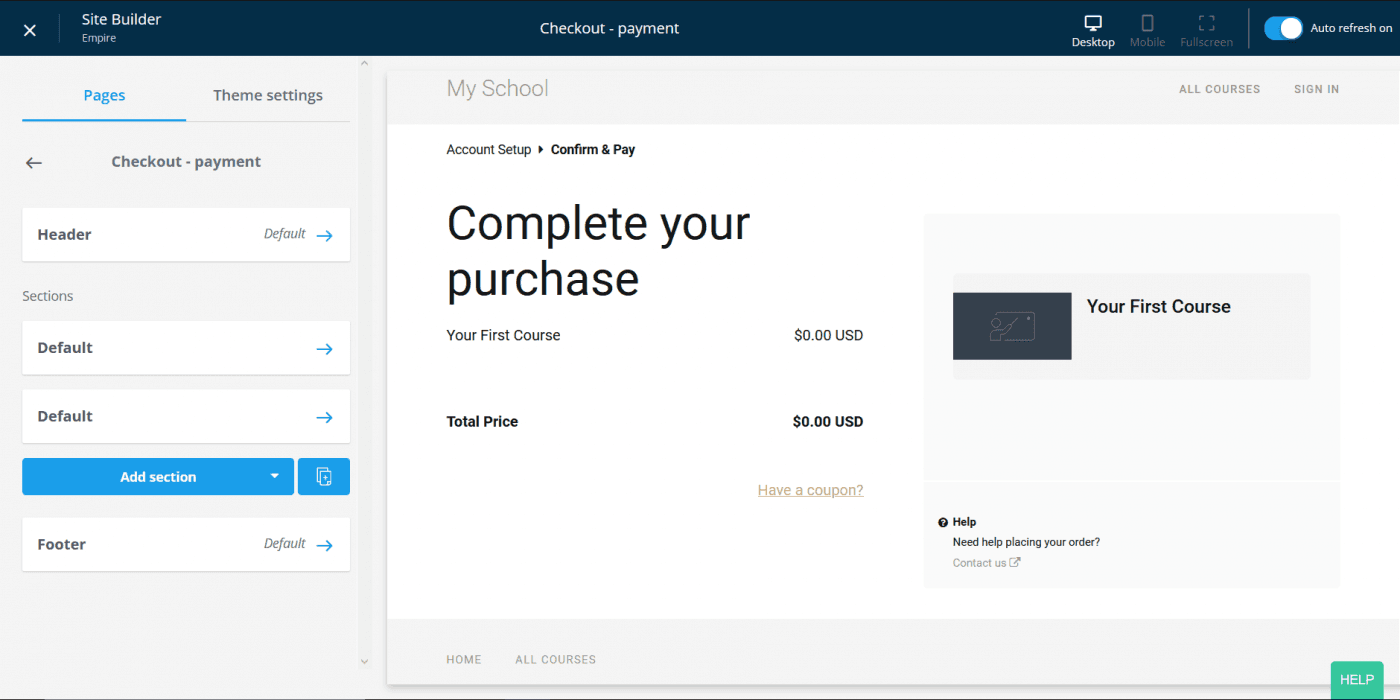
However, Thinkific is much more than a page builder. Its main focus is on course creation and student management, so if you’d like to have a better-looking site, it might be better to create a website with one of the popular site builders.
WordPress, Squarespace, or Wix are all great options. In addition, You can then connect the site with the courses you created and host on Thinkific.
Integrations
Software integrations can make a big difference to a platform’s functionality. Like many other platforms, Thinkific allows a range of integrations to fill any functionality gaps you happen to find.
However, the current number of available integrations is not very big, but those that are at the customers’ disposal are categorized into six groups: e-commerce, automation, analytics, email marketing, student success, and growth tools. Some of the most popular among them are Stripe, PayPal, Shopify, Zapier, Google Analytics, MailChimp, and Zoom.
You may have noticed that Thinkific doesn’t provide blogging functionality as a built-in tool or in the form of a recommended app. That’s a shame because blogging, or more broadly, content marketing, is one of the most important parts of running an online business today.
However, even if there was a built-in blogging option, it’s unlikely to match the quality of a professional blogging platform like DropInBlog, for example.
The good news is that DropInBlog is fully compatible with Thinkific, so you can integrate it quite easily and start blogging as soon as possible. We even have a helpful integration guide to walk you through the process.
Customer Support
Thinkific has a contact page where you can find helpful links and useful content. There’s a demo video introducing the platform to potential clients like yourself, social media links, and an FAQ section. Then, there’s a link to the Thinkific help center, another one that takes you to the Facebook page of the Thinkific community, and one more that leads to the training center.
Thinkific is literally all about learning, so one of its top priorities is to educate its customers. Consequently, there are tons of great self-service resources. They provide good educational content, training material, and guides. The sole purpose of all this material is to make the Thinkific experience as smooth and convenient as possible.
For more direct help or specific questions, there are three options:
- Book a sales call to chat with a member of the solutions expert team.
- Send an email.
- Give the Thinkific support team a phone call. They’re available from Monday to Friday, 9 am to 5 pm PST.
There’s a general consensus that the Thinkific support team is friendly, responsive, and truly helpful. Nevertheless, some reviewers find the customer support service to be a bit slow.
FAQs
Can I start an SEO-friendly blog on Thinkific?
Unfortunately, Thinkific doesn’t have a built-in blogging tool. However, it’s not all bad news – you can integrate DropInBlog and get a fully functional, professional blogging app set up in minutes. DropInBlog will give you the SEO-friendly blog you’re looking for.
Does Thinkific charge fees on a per-sale basis?
Thinkific doesn’t take a cut of your sales. In fact, it’s one of the greatest selling points of the platform. You’ll pay the subscription costs for your selected plan, and standard payment-processing fees from your payment provider still apply.
Can I customize Thinkific pages?
You can customize your Thinkific pages, but the extent to which you can customize them depends on your plan and skill level. You’ll be able to adjust the color and styles on your page even with the Free plan, but that’s the extent of it.
Only once you upgrade to the Start plan will you get access to the code editor, which will enable you to customize your page further. Unfortunately, if you lack coding skills, you’ll still face some limitations here.
Conclusions
So, in summary, what do we think about Thinkific?
Here’s a breakdown:
- Thinkific is a course hosting platform that also provides lots of sales and marketing tools whose sole purpose is to further your online education business.
- Thinkific is very affordable.
- Thinkific is easy to use.
- Thinkific offers customization options, but page design is not a strength, especially when it comes to landing and checkout pages.
- There aren’t many integrations, but those that are available are some of the best in their respective fields.
- Thinkific has great help center staff, and they show a lot of care for their customers with the training material and direct support they provide.
Overall, Thinkific offers a lot for your money. Unlimited courses on every plan and a 30-day free trial give it some bonus points.
Hopefully, this review has been able to iron out those nagging questions you have about Thinkific. We’d like to think we’ve helped you to make a decision about whether to start your online education business with Thinkific or not.
If you’re still on the fence, check out some of Thinkific’s competitors, such as Teachable, LearnWorlds, or Udemy.